

"Burn the Guy!"
History #5: Bonfire Night and November Flames ~ a personal story

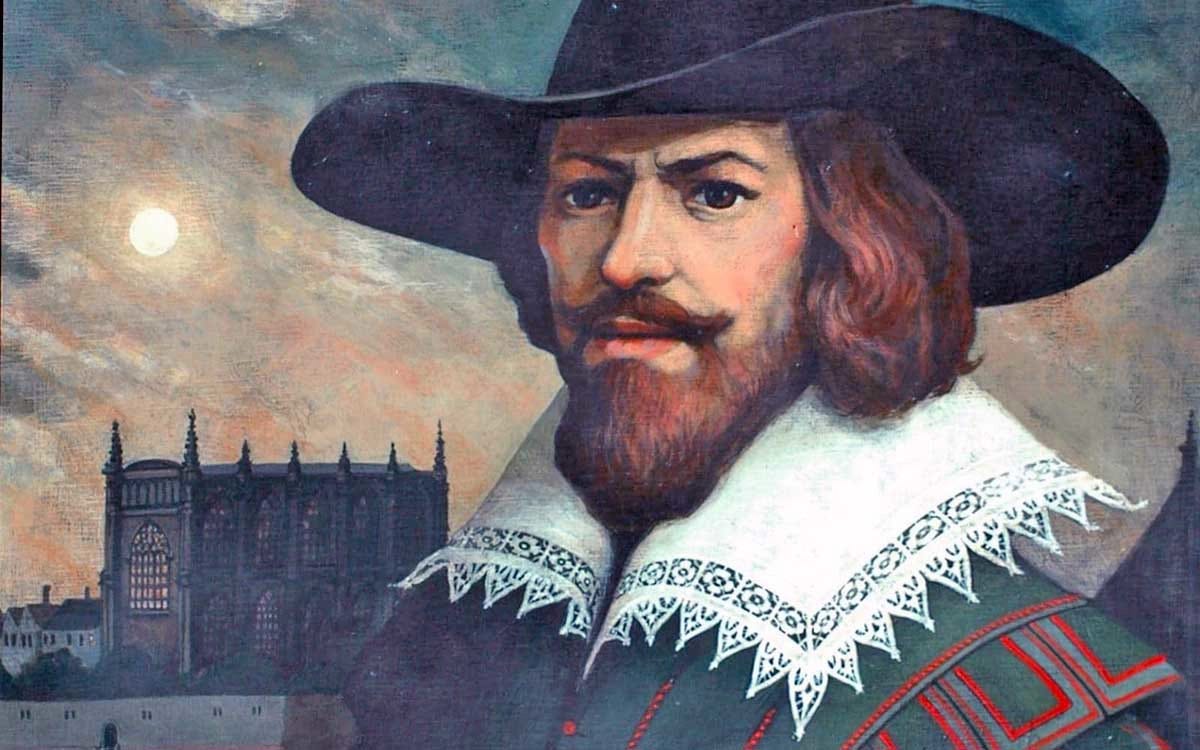
Back in my primary school days, one of the most famous—or infamous—historical figures I learned about was Guido “Guy” Fawkes. Most Brits will know exactly who that is, but for those who don’t, Fawkes was a doomed terrorist in one of the most ambitious assassination attempts in English history, a 17th century drama known as the Gunpowder Plot.
Fawkes was part of a cohort of zealous English Catholics who orchestrated an elaborate but unsuccessful plot to blow up the Protestant King James I and London’s Houses of Parliament on 5th November, 1605. In the early hours of that day, Fawkes was discovered hiding out in a cellar beneath the House of Lords with 36 barrels of gunpowder, matches and a lantern.
Fawkes’ role was to light the fuse, detonate the gunpowder and kill everyone inside the Palace of Westminster during the opening of Parliament. If he and his fellow traitors had succeeded, they would have wiped out an entire government, a monarch and his heir.
Robert Catesby was the leader and driving force behind the plot, but Fawkes was responsible for pulling the trigger, or in this case, lighting the fuse, making him the “fall guy”. An explosives expert, Fawkes was the one found with all the gunpowder and arrested first, so his name became synonymous with the failed act of religious warfare. He was imprisoned in the Tower of London, subjected to brutal torture and finished off with a grisly execution: hung, drawn and quartered along with his co-conspirators, their butchered bodies displayed for all and sundry to see and left for the crows to feast upon.
I was horrified to learn how grim and gruesome English history was during these lessons. Along with other significant dates later that same century, like the Great Plague in 1665 and the Great Fire of London in 1666, the Gunpowder Plot was a major event on the school curriculum. The teacher drummed the date into our heads with this foreboding rhyme:
Remember, remember, the 5th of November,
Gunpowder, treason and plot.
I see no reason
Why gunpowder treason
Should ever be forgot.
I wonder if British children are still being taught about Guy Fawkes and the Gunpowder Plot today.

As well as learning the “Remember, remember” rhyme, I discovered there was a whole ritual we had to participate in—an event called ‘Bonfire Night’—also known as ‘Guy Fawkes Night’. This event of so-called celebrations involved gathering around a bonfire in the freezing cold, watching fireworks, and then a macabre main attraction: tossing a lifelike straw man in human clothes and a mask (called “the guy”) onto the fire—an effigy of Guy Fawkes—and watch him incinerate and crumble to ashes.
All this to commemmorate the thwarted Gunpowder Plot of 1605, a supposed gratitude ritual that so many lives were spared hundreds of years ago. To me, it seemed like a gratuitous and repetitive punishment—a form of public execution, sport and entertainment for the gathered masses—just like the olden days.
The fact that Guy Fawkes was imprisoned, tortured and executed several centuries earlier was not sufficient for the English—they had to re-enact his barbaric death with an effigy, year after year after year. In one way or another, this is what people have done for centuries—watched people burn at the stake for being the wrong religion or wrong sex or for a crime they didn’t commit, like a woman accused of witchcraft in medieval times.
I’m sure that tonight, 5th November, 2025, plenty of people are watching guys burn on bonfires in Britain.

